

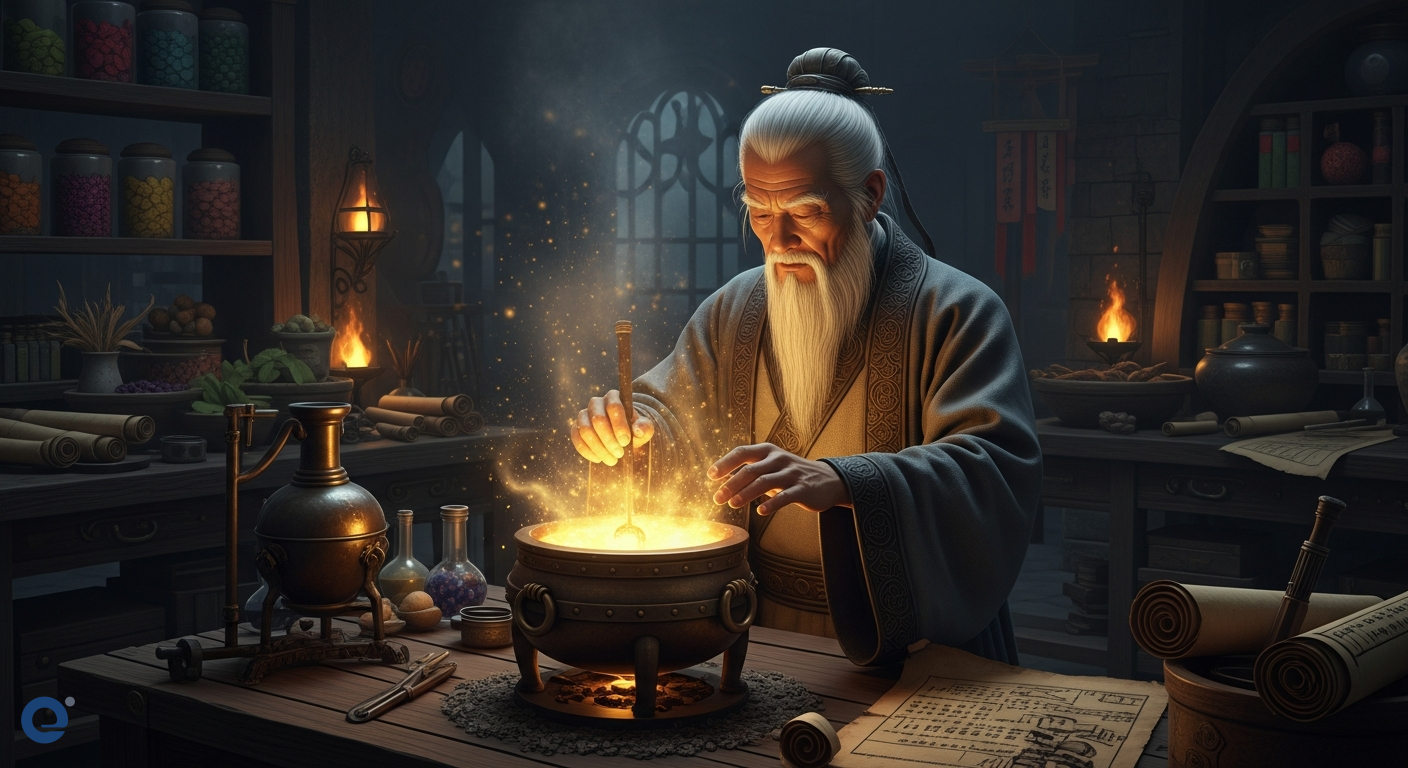
The pursuit of eternal life has captivated humanity for millennia. In ancient China, this quest took a unique and profound form within the Daoist tradition. Specifically, the Han dynasty alchemists, often referred to as fangshi or “masters of methods,” embarked on a remarkable journey. This journey involved intricate alchemical practices, both external and internal, aimed at achieving immortality. Therefore, understanding their methods offers a fascinating glimpse into ancient Chinese cosmology and the human desire for transcendence. This article delves into the world of Han alchemists and their enduring legacy.
Indeed, the concept of immortality was central to their endeavors. They sought not just a longer life, but a transformation of the body and spirit. This transformation was believed to lead to a state of being akin to the gods. As a result, their work was deeply intertwined with religious and philosophical beliefs of the time.
The Dawn of Alchemical Pursuit in the Han Dynasty
The Han dynasty (206 BCE – 220 CE) marked a significant period for the development of Daoism. It was during this era that many foundational texts were compiled and influential figures emerged. Crucially, the distinction between the philosophical Daoist school (Daojia) and the religious Daoist religion (Daojiao) began to blur. Scholars now understand these terms as practically synonymous, reflecting a unified tradition. Therefore, the alchemical practices of the Han period can be seen as an integral part of this broader Daoist movement.
In this context, the fangshi gained prominence. These individuals were skilled in various arts, including divination, astrology, medicine, and crucially, alchemy. They served both the imperial court and the general populace, offering esoteric knowledge and practical solutions. Their quest for immortality, however, set them apart.
External Alchemy (Waidan): The Elixir of Life
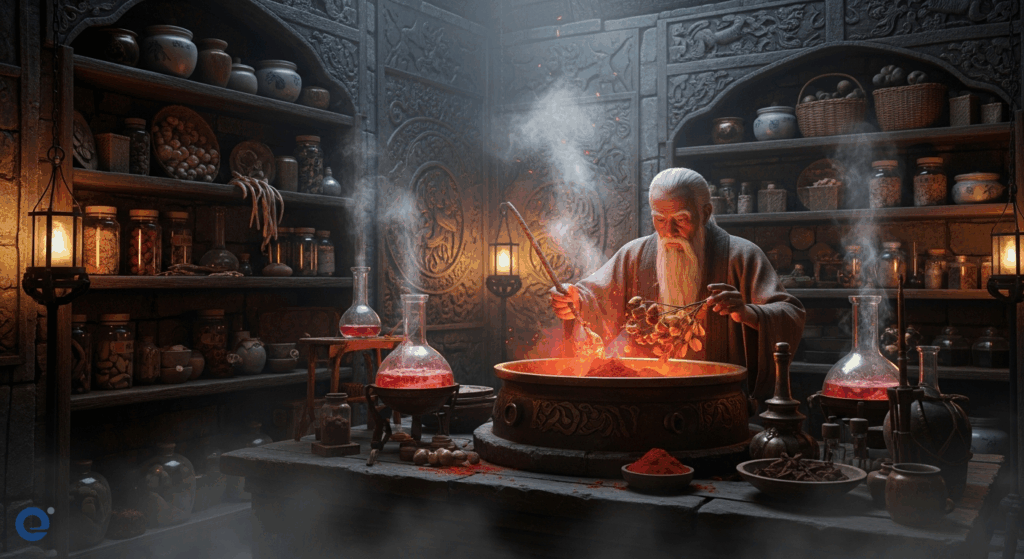
Initially, Daoist alchemy focused heavily on external practices, known as waidan. The primary goal of waidan was the creation of an elixir of immortality. This elixir was believed to be synthesized from precious minerals and herbs. For instance, cinnabar (mercuric sulfide) was a key ingredient, often combined with gold and other substances. The alchemists would meticulously heat and refine these materials in specialized furnaces.
The process was complex and often dangerous. Many alchemists suffered from mercury poisoning due to the toxic nature of the substances they worked with. Despite these risks, the allure of immortality drove them forward.
The belief was that by consuming the perfected elixir, one could transmute their mortal body into an immortal one. This process was seen as a physical transformation, bestowing longevity and divine qualities upon the imbuer. Moreover, the pursuit of waidan was not merely a chemical experiment; it was a spiritual discipline. The alchemist’s state of mind and purity of intention were considered vital for success. Therefore, meditation and ethical conduct often accompanied the physical work.
The creation of the elixir was a painstaking process. It involved precise measurements and specific heating temperatures. The alchemists documented their experiments, leaving behind a body of literature that offers insights into their methods and beliefs. However, the success of waidan in producing a true elixir of immortality remains a subject of debate. Many historical accounts suggest that the elixirs were often toxic, leading to the death of the consumer rather than immortality. Nevertheless, the pursuit itself spurred significant advancements in chemical knowledge and metallurgical techniques in ancient China.
The Shift Towards Internal Alchemy (Neidan)
Over time, the focus of Daoist alchemy began to shift. The inherent dangers and questionable efficacy of waidan led practitioners to explore alternative methods. This evolution gave rise to neidan, or internal alchemy. Unlike waidan, which sought to create an elixir from external substances, neidan focused on cultivating immortality from within the practitioner’s own body. This marked a significant philosophical and practical departure.
The core principle of neidan is the transformation of the body’s own vital energies. These energies are often described as jing (essence), qi (breath or vital force), and shen (spirit). The ultimate aim is to refine and transmute these components, thereby achieving a state of spiritual and physical immortality. As a result, neidan practices are deeply rooted in the understanding of the human body as a microcosm of the universe.
This shift reflects a deeper understanding of Daoist philosophy. The emphasis moved from manipulating external matter to cultivating internal potential. The body itself was seen as a “crucible” where these transformations could occur. Therefore, the practitioner became the alchemist, working with their own being as the raw material.
The Body as a Crucible: Neidan Practices
Internal alchemy involves a range of sophisticated practices designed to harmonize and elevate the body’s vital energies. Meditation is a cornerstone of neidan. Through focused meditation, practitioners aim to calm the mind and achieve a state of deep stillness. This stillness is crucial for internal transformation. In addition, breathing exercises, known as qigong, play a vital role. These exercises help to cultivate and circulate qi throughout the body.
Furthermore, visualization techniques are often employed. Practitioners might visualize the circulation of energy or the transformation of internal substances. The goal is to consciously guide the internal alchemical process. This internal work is often described metaphorically, using language borrowed from external alchemy. For example, the body’s internal organs might be referred to as furnaces or cauldrons.
The practice of neidan is a lifelong commitment. It requires discipline, patience, and a profound understanding of Daoist principles. The ultimate reward is not just longevity but a spiritual awakening and union with the Dao. It is important to note that neidan is not about achieving a physical, eternal existence in the same way as waidan might have envisioned. Instead, it is about transcending the limitations of the mortal body and achieving a state of spiritual liberation. The Stanford Encyclopedia of Philosophy highlights that Daoist texts themselves do not always neatly separate “philosophy” from “religion,” and practices like meditation and alchemy are seen as integral components of the tradition. This holistic view emphasizes the interconnectedness of practice and belief within Daoism.
Key Concepts and Terminology in Daoist Alchemy
To understand Han alchemists, it is essential to grasp some of their core concepts. These terms illuminate the philosophical underpinnings of their practices. Firstly, the Dao itself is the fundamental principle of the universe, the unnamable, ultimate reality. The alchemists sought to align themselves with the Dao, believing this alignment was key to achieving immortality.
Secondly, the concept of Yin and Yang is crucial. These are complementary, opposing forces that permeate the universe. The harmonious interplay of Yin and Yang within the body was seen as essential for health and longevity. Alchemy, both internal and external, aimed to balance these forces.
Thirdly, the Three Treasures – Jing, Qi, and Shen – are central to neidan. Jing is often translated as essence, representing the fundamental material and reproductive energy. Qi is vital energy or breath, the animating force of life. Shen refers to spirit or consciousness, the highest aspect of the self. The alchemical process involves refining jing into qi, qi into shen, and ultimately, shen into emptiness, which is seen as union with the Dao.
Furthermore, the idea of “re-generation in life” is a significant soteriological concept within Daoism. It suggests that transformation and a form of immortality can be achieved while still living. This aligns perfectly with the goals of internal alchemy. This concept emphasizes the practical, transformative aspects of Daoist practice.
The Legacy of Han Alchemists
The practices and philosophies developed by Han alchemists had a profound and lasting impact on Chinese culture and beyond. While the literal pursuit of an elixir of life may have waned, the principles of internal alchemy continued to evolve. They influenced the development of traditional Chinese medicine, martial arts, and various schools of Daoism.
The emphasis on self-cultivation and the harmonious integration of mind, body, and spirit continues to resonate today. Many modern practices, such as Tai Chi and Qigong, have roots in these ancient alchemical traditions. Moreover, the philosophical underpinnings of Daoism, with its emphasis on balance, naturalness, and living in accordance with the Dao, remain relevant.
The Han alchemists represent a fascinating intersection of science, philosophy, and spirituality. Their quest, though perhaps rooted in a desire for the impossible, led to a deep exploration of human potential and the nature of existence. Their legacy is not just in the texts they left behind, but in the enduring practices that continue to inspire seekers of wisdom and well-being. For instance, the concept of “nourishing life” (yangsheng) practices, which were integral to the alchemists’ lifestyle, is still widely practiced. These practices aim to prolong life and enhance vitality through diet, exercise, and mindful living.
The diligent research and meticulous experimentation of these early alchemists laid the groundwork for future explorations into the human condition. They demonstrated a remarkable dedication to understanding the subtle energies that govern life. Their work serves as a testament to humanity’s eternal quest for meaning and transcendence.
Frequently Asked Questions about Daoist Alchemy
What is the primary difference between Waidan and Neidan?
Waidan, or external alchemy, focused on creating an elixir of immortality from physical substances like minerals and herbs. In contrast, Neidan, or internal alchemy, sought to achieve immortality by cultivating and transforming the body’s own vital energies (Jing, Qi, Shen) from within.
Who were the Han alchemists?
The Han alchemists were known as fangshi, or “masters of methods.” They were practitioners skilled in various esoteric arts, including divination, astrology, medicine, and alchemy, during the Han dynasty in China. They were particularly known for their pursuit of immortality through alchemical means.
What were the main ingredients in Waidan elixirs?
Cinnabar (mercuric sulfide) was a key ingredient in Waidan elixirs, often combined with gold and other precious minerals and herbs. The process involved heating and refining these materials to create the elixir believed to grant immortality.
Can you explain the concept of the Three Treasures (Jing, Qi, Shen)?
The Three Treasures are fundamental to Neidan. Jing represents essence (physical and reproductive energy), Qi is vital energy or breath (the animating force), and Shen is spirit or consciousness. Neidan aims to refine Jing into Qi, Qi into Shen, and Shen into emptiness, leading to spiritual union with the Dao.
Did Han alchemists achieve immortality?
While the historical evidence for achieving literal immortality through Waidan is scarce and often points to toxic outcomes, the philosophical and practical aspects of alchemy, particularly Neidan, have had a lasting impact. The pursuit itself led to advancements in chemistry and a deeper understanding of the human body and spirit within Daoist traditions. The ultimate goal of Neidan is often seen as spiritual transcendence rather than physical eternal life.
Tóm tắt: Learn Tai Chi, Qi Gong and Taoist philosophy with my online wellness academy. Click here to learn more: ……