

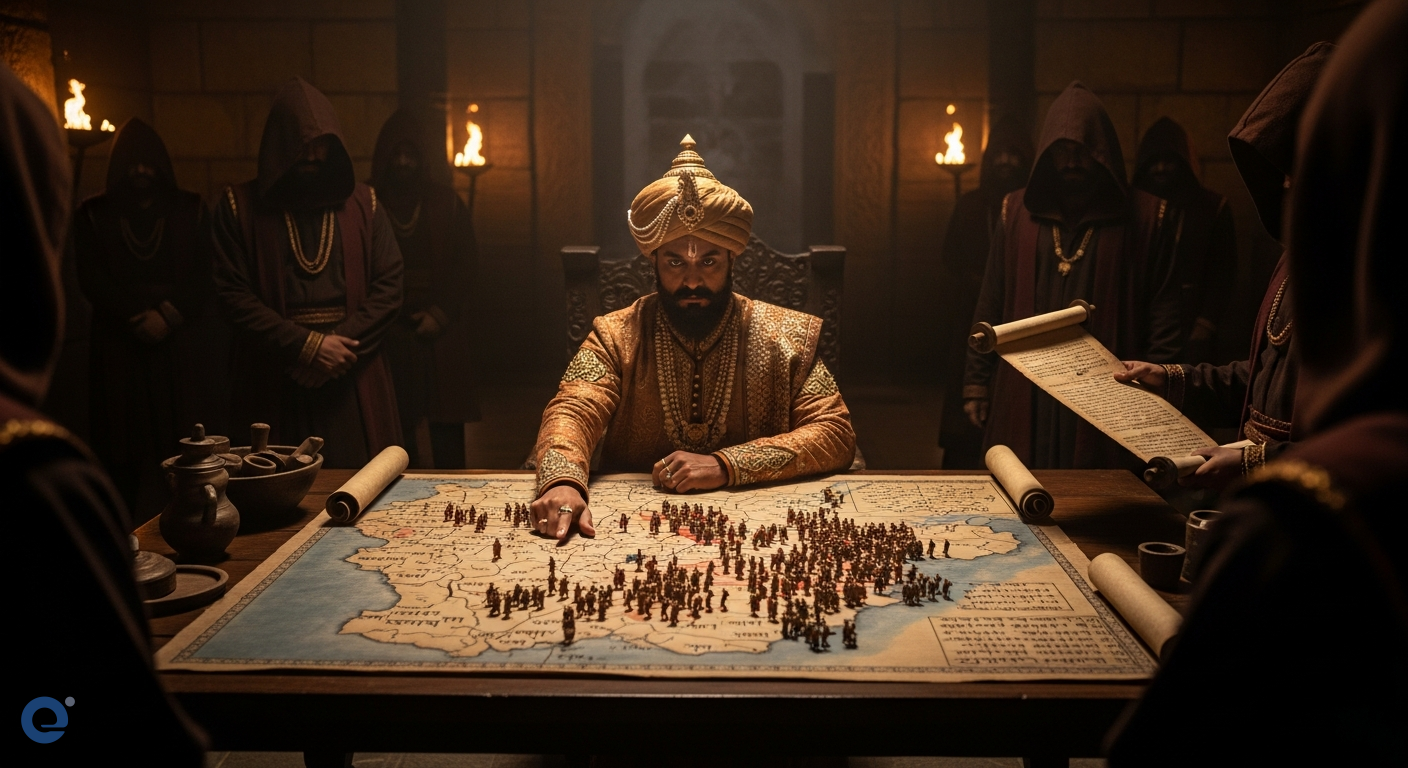
The Mauryan Empire, a colossal force in ancient India, built its power not just on armies and administration, but on a sophisticated network of spies. This clandestine world, masterfully detailed in the Arthashastra, reveals a level of espionage far ahead of its time. Indeed, ancient India, alongside China, took an early lead over Greece and Rome in developing advanced intelligence operations. The Arthashastra, a treatise on statecraft attributed to Chanakya (also known as Kautilya), serves as the foundational text for understanding these intricate spycraft techniques. It wasn’t just about gathering information; it was about shaping perceptions, sowing discord, and ensuring the empire’s security through unparalleled cunning.
The Mastermind: Chanakya and the Arthashastra
Chanakya, a brilliant scholar and strategist, was the architect behind Chandragupta Maurya’s rise to power. Humiliated by the Nanda Dynasty, Chanakya dedicated himself to dismantling their rule. He meticulously groomed Chandragupta, using his profound understanding of statecraft, economics, and, crucially, espionage. The Arthashastra became his playbook, outlining a comprehensive approach to governance that heavily emphasized intelligence gathering and counter-intelligence. This ancient text provides invaluable insights into the operational methods and philosophical underpinnings of the Mauryan intelligence apparatus.
Chanakya’s genius lay in his multifaceted approach. He understood that true power stemmed from knowledge and the ability to manipulate. Therefore, his spies were not merely informants; they were agents of influence, psychological warriors, and protectors of the realm. His methods were so effective that they continue to resonate with modern intelligence agencies today. The effectiveness of his system highlights the sophisticated nature of ancient Indian political thought and its practical application.
Chanakya’s Espionage Arsenal: A Diverse Toolkit
The Mauryan spy network was remarkably diverse, employing a range of agents with specialized skills. These agents infiltrated various levels of society, ensuring comprehensive coverage of potential threats and opportunities. Their methods were ingenious and often relied on deception and the exploitation of social structures. Chanakya masterfully blended these diverse elements into a cohesive and formidable intelligence machine.
Sanyasis: The Eyes and Ears of the Empire
Ascetics, known as Sanyasis, were a cornerstone of Chanakya’s intelligence network. These revered religious figures possessed a unique advantage: they could travel freely across borders and social strata without arousing suspicion. Their holy status granted them access to places and conversations that would be inaccessible to others. As a result, Sanyasis served as invaluable informants, gathering intelligence on enemy plans, troop movements, and political dissent. Their perceived detachment from worldly affairs made them ideal observers, able to report without bias.
Moreover, their mobility allowed them to act as couriers for sensitive information, safely transporting messages across vast distances. This seemingly simple tactic provided the Mauryan leadership with timely and accurate intelligence, crucial for making informed decisions. The trust placed in these holy men was a testament to Chanakya’s understanding of human psychology and societal norms.
Vishakanyas: The Deadly Allure of Poisonous Maidens
Perhaps the most infamous agents in Chanakya’s arsenal were the Vishakanyas, or “poisonous maidens.” These were highly trained female agents who used their beauty and charm as their primary weapons. Their mission was to infiltrate enemy courts and gain access to inner circles. Once inside, they could gather critical intelligence, sow discord among adversaries, and, in some cases, eliminate key figures through the strategic use of poisons. The effectiveness of their methods lay in their ability to exploit the desires and vulnerabilities of their targets.
The training of Vishakanyas was likely rigorous, encompassing not only seduction but also the administration of various toxins, some of which might have been undetectable. This made them a particularly terrifying and effective tool for the Mauryan state. Their existence highlights the ruthless pragmatism that underpinned Chanakya’s approach to state security. The use of such agents underscores the lengths to which the Mauryans would go to protect their empire.
Vyaj Vaparins: Merchants in Disguise
Espionage often thrives on the ability to blend in seamlessly. Chanakya employed merchants and traders, known as Vyaj Vaparins, as a cover for his spies. These individuals, disguised as ordinary businessmen, traveled extensively through enemy territory. While conducting their trade, they discreetly collected vital economic and political information. Their legitimate business activities provided them with both access and a plausible reason for their presence in foreign lands.
This method was particularly effective for gathering intelligence on trade routes, economic vulnerabilities, and the general sentiment of the populace. Furthermore, merchants often had extensive networks of contacts, which could be leveraged for further intelligence gathering. This approach allowed for the systematic collection of data across a wide geographical area, providing a comprehensive overview of the empire’s surroundings. It is a tactic that finds echoes in the operations of modern intelligence agencies, where seemingly ordinary professions are used as cover.
Titikshakaras: Masters of Endurance and Interrogation
The Titikshakaras were individuals trained in enduring harsh conditions and, when necessary, extracting information through interrogation. While the extent of torture employed by Chanakya remains a subject of historical debate, these agents were undoubtedly skilled in psychological manipulation and the application of pressure. Their role was likely to break enemy agents or extract vital information from captured individuals. Their resilience allowed them to operate in difficult environments and withstand interrogation themselves, making them valuable assets.
Their training would have focused on both physical and mental fortitude. This ensured they could withstand duress and remain effective even under extreme circumstances. The inclusion of such agents demonstrates a comprehensive approach to intelligence, covering both information acquisition and the neutralization of enemy intelligence efforts. The ethical implications of their methods are a stark reminder of the often-brutal realities of ancient warfare and statecraft.
Beyond Brute Force: The Nuances of Mauryan Espionage
Chanakya’s espionage system was far more sophisticated than mere infiltration and extraction. He understood the power of psychological warfare and the importance of proactive counter-intelligence. His strategies aimed to weaken enemies from within and protect the Mauryan state from external and internal threats. This nuanced approach set his methods apart from simpler forms of spying.
Psychological Warfare: The Art of Fear and Paranoia
Spreading fear and paranoia within enemy ranks was a key tactic employed by Chanakya. His spies were tasked with manipulating information, creating doubt among enemy leaders and their allies. By making adversaries question their own loyalties and the reliability of their intelligence, Chanakya could sow internal discord and weaken their resolve. This psychological manipulation could often be more effective than direct military confrontation.
Misinformation campaigns were carefully crafted and disseminated through various channels. The goal was to create an atmosphere of suspicion, where trust eroded and decision-making became paralyzed. This strategy allowed the Mauryan Empire to gain a significant advantage without necessarily engaging in costly battles. The effectiveness of such tactics highlights the deep understanding of human behavior that informed Chanakya’s strategies.
Counter-Intelligence: Protecting the Realm’s Secrets
Chanakya recognized that an effective intelligence operation required robust counter-intelligence measures. He understood the importance of protecting his own secrets and identifying potential threats before they could materialize. This involved infiltrating enemy spy networks with double agents who could feed misinformation back to the enemy and identify their agents operating within Mauryan territory. Protecting the empire’s secrets was as critical as acquiring intelligence on others.
These double agents provided a crucial layer of security, allowing the Mauryans to anticipate and neutralize threats. By understanding the enemy’s intelligence capabilities, Chanakya could better protect his own. This proactive stance was essential for maintaining the empire’s stability and preventing surprise attacks. The sophistication of this counter-intelligence apparatus speaks volumes about the advanced nature of Mauryan statecraft.
Focus on Human Intelligence (HUMINT)
At its core, Chanakya’s system heavily relied on Human Intelligence (HUMINT). This involved the careful recruitment, training, and cultivation of assets within enemy territories. The emphasis was on building long-term relationships and fostering loyalty, rather than relying solely on coercion. HUMINT provided the most nuanced and detailed information, offering insights into motivations, intentions, and internal dynamics that other forms of intelligence could not provide.
The success of this HUMINT-centric approach was dependent on the skill of Mauryan intelligence officers in understanding cultural nuances, building rapport, and maintaining operational security. This focus on human sources is a principle that remains central to intelligence gathering in the modern era. It underscores the enduring relevance of Chanakya’s strategic thinking. The cultivation of these human assets was a long-term investment that yielded significant strategic dividends.

Echoes in the Modern World: Chanakya’s Legacy
While separated by millennia, Chanakya’s espionage methods share striking similarities with modern spy agencies. The fundamental principles of deception, infiltration, and information gathering remain constant. Agencies like MOSSAD, RAW, CIA, MI6, and the former KGB have all, in their own ways, employed tactics that echo Chanakya’s ancient playbook. This enduring legacy highlights the timeless nature of strategic intelligence.
MOSSAD and Sanyasis
Israel’s MOSSAD, known for its sophisticated operations, shares similarities with Chanakya’s use of Sanyasis. MOSSAD often utilizes religious figures and cultural understanding to gather intelligence in sensitive regions. Their agents are adept at blending into local populations, collecting information on everything from political dissent to potential military operations. This ability to leverage trusted societal roles for intelligence purposes is a direct parallel.
RAW and Vyaj Vaparins
India’s own Research and Analysis Wing (RAW) employs methods akin to Chanakya’s Vyaj Vaparins. RAW utilizes seemingly ordinary individuals, such as businessmen or journalists, as cover for clandestine activities. These agents travel discreetly, gathering intelligence and establishing contacts within countries of interest. This approach allows for the collection of vital information under the guise of legitimate travel and business.
CIA and HUMINT
The Central Intelligence Agency (CIA) places a high value on HUMINT, mirroring Chanakya’s reliance on human sources. The CIA cultivates a vast network of human assets worldwide through years of relationship building and strategic recruitment. These sources provide invaluable insights into political climates, potential threats, and upcoming events, much like Chanakya’s network provided intelligence to the Mauryan Empire. Chanakya’s methods are remarkably similar to modern spycraft.
MI6 and Long-Term Assets
Britain’s Secret Intelligence Service (MI6) shares Chanakya’s emphasis on cultivating long-term assets within enemy territories. MI6 officers often operate under diplomatic cover, spending years building trust with potential sources. This fosters loyalty and grants access to classified information, a strategy that Chanakya would have readily recognized and appreciated. The dedication to building deep, lasting relationships with informants is a hallmark of effective intelligence operations across centuries.
The strategic deployment of agents who can integrate seamlessly into target societies, combined with a deep understanding of human psychology, remains the bedrock of intelligence work. Chanakya’s insights into these areas were exceptionally advanced for his era. His work predates many of the formal structures and technologies of modern intelligence, yet its core principles endure. The parallels are not mere coincidence; they are a testament to the fundamental nature of espionage as a tool of statecraft.
The Mauryan Court: A Hub of Espionage
The Mauryan court itself was a center of intelligence activity. Information flowed in from numerous sources, and decisions were made based on this intelligence. The king and his advisors would analyze reports, dispatch agents, and manage the complex network. This created a dynamic environment where constant vigilance and adaptation were necessary for survival and prosperity. The court was not just a seat of power, but a nerve center for clandestine operations.
The establishment of a dedicated espionage apparatus was a significant innovation for its time. It allowed the Mauryan Empire to maintain stability, expand its influence, and defend itself effectively against numerous threats. The integration of intelligence into the very fabric of governance was a key factor in the empire’s success and longevity. The Arthashastra details how China and India took an early lead over Greece and Rome in intelligence operations.
Frequently Asked Questions about Mauryan Spycraft
What is the Arthashastra?
The Arthashastra is an ancient Indian treatise on statecraft, economic policy, and military strategy, attributed to Chanakya. It provides detailed insights into governance, including espionage.
Who was Chanakya?
Chanakya, also known as Kautilya, was a scholar, philosopher, and royal advisor who played a pivotal role in the rise of the Mauryan Empire. He is credited with authoring the Arthashastra.
What were the main types of spies used by the Mauryans?
The Mauryans employed various types of spies, including Sanyasis (ascetics), Vishakanyas (poisonous maidens), Vyaj Vaparins (merchants in disguise), and Titikshakaras (endurance specialists).
How did Mauryan spycraft compare to that of Greece and Rome?
Ancient India, through texts like the Arthashastra, demonstrated a more developed and systematic approach to espionage compared to Greece and Rome during the same period.
Are Chanakya’s methods still relevant today?
Yes, many of Chanakya’s core principles, such as the reliance on HUMINT, psychological warfare, and the use of diverse agent types, are still relevant and mirrored in modern intelligence agencies.
Tóm tắt: Ancient India’s Secret Spy Network | Intelligence & Espionage in History Uncover the fascinating world of espionage in ancient ……